

Laboratories & Physicians
Clinical Management
From Diagnosis to Clinical Management
Clinical management depends on the infection site, extent of disease, patient characteristics and clinical context.1,2
Skin
- Topical antifungal treatment is commonly used for localized cutaneous dermatophyte infections.
Hair & Scalp
- Tinea capitis generally requires systemic therapy because of involvement of the hair follicle.
Nails
- Management of onychomycosis may be prolonged, with topical and/or systemic therapy selected according to disease severity and patient factors.1,2
When Steroids Mask the Infection
Tinea incognito
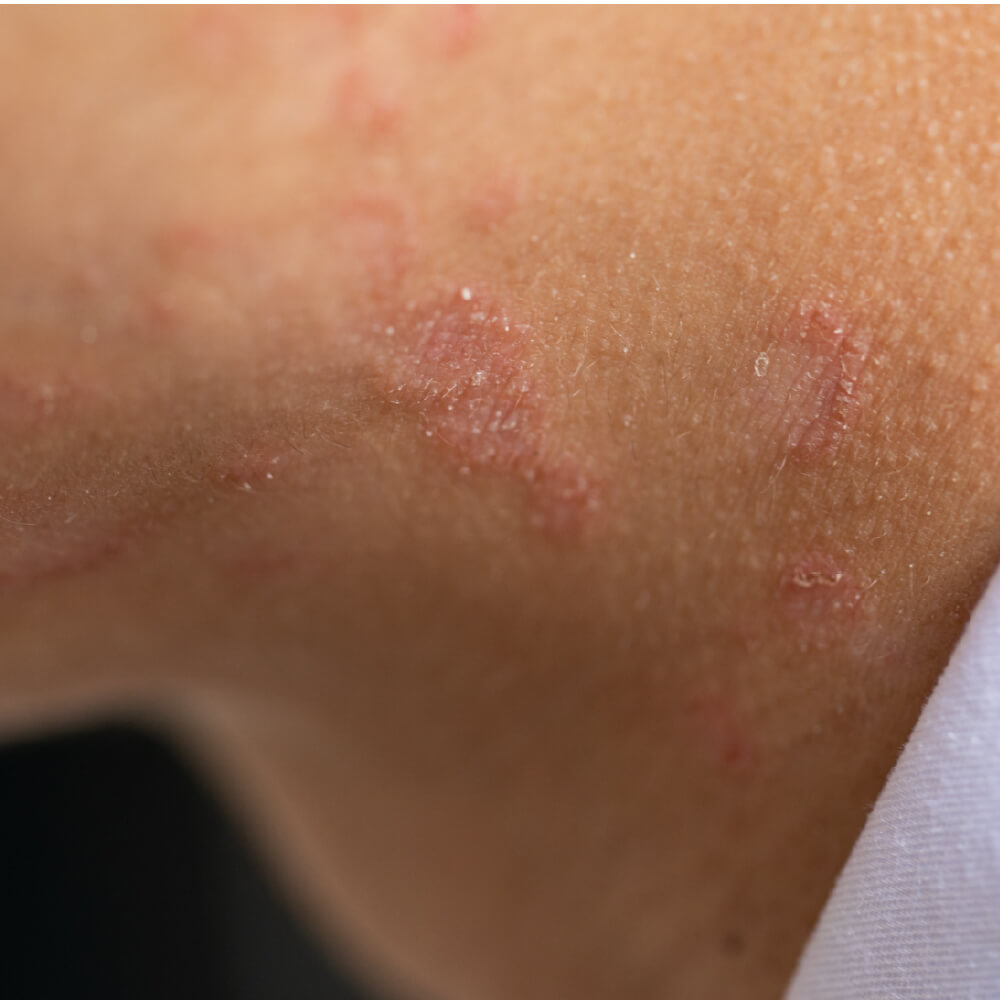
Use of topical or systemic corticosteroids can modify the clinical appearance of dermatophytosis without treating the underlying fungal infection.
The resulting atypical presentation is known as tinea incognito.3
It may:
- Mask characteristic signs
- Make lesions more difficult to recognize
- Allow infection to extend
- Contribute to delayed diagnosis3
When Treatment Does Not Work as Expected
Persistent or recurrent disease may reflect:
- Reinfection
- An alternative diagnosis
- Incomplete eradication
- Treatment-related factors:
- Reduced antifungal susceptibility
- Emerging resistance*
* The emergence of T. indotineae, including terbinafine-resistant isolates, has introduced an additional consideration in persistent or treatment-refractory dermatophytosis.4
Have a question?
For general information about this website, contact our team.
For questions about your health, diagnosis, or treatment, please consult a healthcare professional.
References
- World Health Organization. Ringworm (tinea). WHO; 19 June 2025.
- Nenoff P, Reinel D, Mayser P, et al. S1 Guideline onychomycosis. J Dtsch Dermatol Ges. 2023;21(6):678–692. doi:10.1111/ddg.14988.
- Zacharopoulou A, et al. Tinea Incognito: Challenges in Diagnosis and Management. J Clin Med. 2024;13:3267.
- Ferreira CB, Lisboa C. A systematic review on the emergence of terbinafine-resistant Trichophyton indotineae in Europe: Time to act? J Eur Acad Dermatol Venereol. 2025;39(2):364–376. doi:10.1111/jdv.20270.